









A breakthrough in minerals transportation technology is helping reduce energy needs for Australia’s top export commodities.
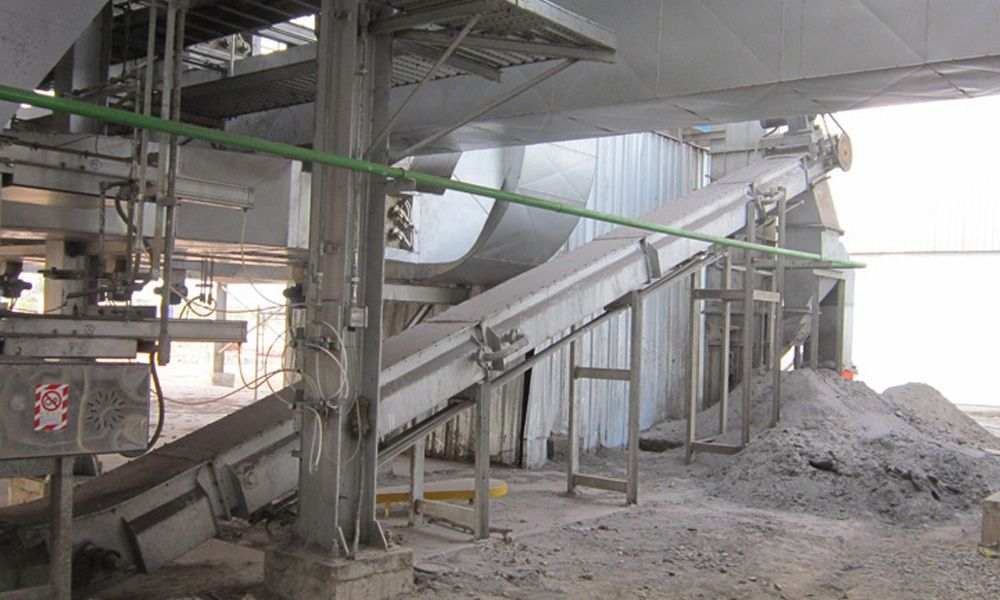
Every tonne of critical minerals – including iron ore, coal and copper – is transported by belt conveyors before being exported out of Australia. The conveyors are the highways that run through mining operations and mineral processing plants.
The growing demand for Australia’s critical materials has prompted industry to look for improvements in belt conveyor technology, with the aim of reducing energy consumption, improving material handling, and reducing capital and operating costs.
Professor Craig Wheeler and his team at the University’s Centre for Bulk Solids have devoted more than a decade to the research and development of the patented Rail-Running ConveyorTM, which has been created in partnership with FLSmidth Mining Technologies in the United States.
This world-first approach combines the advantages of two familiar and proven transport technologies – rail and overland belt conveying. The result is an energy and cost-efficient bulk material handling system.
Rail-Running ConveyorTM systems are designed so that conveyor belts rest on a series of wheeled carts that move along tracks, thereby delivering continuous transportation of bulk materials over long distances.
It can be built as an open trough or an enclosed pipe to transport critical minerals. It also overcomes many of the maintenance, speed and curve constraints in conventional belt conveyors. Studies during the research and development process have shown that the Rail-Running ConveyorTM system can reduce energy consumption involved in overland transport by up to 50 percent compared to conventional conveyor systems.1,2
From research to the real world
Two full-scale Rail-Running ConveyorTM systems have been designed for a leading international copper mining company.
The first system has been designed to transport 5,000 metric tonnes of copper ore per hour and is expected to save approximately $1 million per year in power costs compared to a conventional trough conveyor system. It will be commissioned in late 2025 in southern Africa.
The second system will be installed in the Americas and will transport over 13,000 metric tonnes per hour of copper ore with an estimated annual power savings of $2 million.
1 Mining Report, 2022, Vol 158, Issue 5, p479
2 International Journal of Mining, 2021, Vol. 35,